Spiritual & Philosophical
The 19 Best Self-Help Books for 2026, Grouped by What You Want to Change
Quick answer
Start with Atomic Habits by James Clear (2018). Most self-help goals, whether that is exercise, focus or calmer evenings, come down to doing a small thing reliably, and this is the clearest system for that. It works whether or not you feel motivated. If your main struggle is low mood, start with Feeling Good by David D. Burns instead. Below are 19 picks grouped by goal: habits, mindset, anxiety and stress, relationships, money and purpose. Each one comes with who it suits and where to begin.
As an Amazon Associate, we earn from qualifying purchases.
The best self-help books at a glance
| # | Book | Author | Year | Best for |
|---|---|---|---|---|
| 1 | Atomic Habits | James Clear | 2018 | Our pick to start with |
| 2 | Tiny Habits | BJ Fogg | 2019 | People who failed with big plans |
| 3 | Feeling Good: The New Mood Therapy | David D. Burns | 1980 | Low mood and harsh self-criticism |
| 4 | Mindset | Carol S. Dweck | 2006 | Learning from failure |
| 5 | The Happiness Trap | Russ Harris | 2007 | Worry and overthinking |
| 6 | Unwinding Anxiety | Judson Brewer | 2021 | Anxiety that feels like a habit |
| 7 | Burnout: The Secret to Unlocking the Stress Cycle | Emily Nagoski & Amelia Nagoski | 2019 | Chronic stress and exhaustion |
| 8 | How to Win Friends and Influence People | Dale Carnegie | 1936 | Getting along with people |
| 9 | The Seven Principles for Making Marriage Work | John M. Gottman & Nan Silver | 1999 | Couples |
| 10 | Attached | Amir Levine & Rachel Heller | 2010 | Dating and understanding your patterns |
| 11 | Crucial Conversations | Kerry Patterson et al. | 2002 | High-stakes talks at home or work |
| 12 | The Psychology of Money | Morgan Housel | 2020 | Your relationship with money |
| 13 | Your Money or Your Life | Vicki Robin & Joe Dominguez | 1992 | Spending in line with your values |
| 14 | I Will Teach You to Be Rich | Ramit Sethi | 2009 | A practical six-week money setup |
| 15 | Man’s Search for Meaning | Viktor E. Frankl | 1946 | Meaning in hard times |
| 16 | Four Thousand Weeks | Oliver Burkeman | 2021 | Productivity burnout |
| 17 | Designing Your Life | Bill Burnett & Dave Evans | 2016 | Career and life direction |
| 18 | Deep Work | Cal Newport | 2016 | Focus in a distracted world |
| 19 | The Let Them Theory | Mel Robbins | 2024 | Letting go of other people’s opinions |
How we chose these self-help books
Self-help is a crowded shelf, and a lot of it repeats the same advice in a new cover. We kept books that give you something to do, not just something to feel. We favored authors with relevant training or research behind them (psychiatrists, psychologists, researchers) and books based on approaches clinicians use, such as cognitive behavioral therapy and ACT. We also kept a few classics that have helped readers for generations. Where the science behind a popular idea has turned out weaker than the book claims, we note it. Titles, authors and first-publication years were checked against Open Library and publisher records.
Do not read all 19. Find the goal that matters most right now, read one book, and do its exercises for a month before you buy the next one.
Best self-help books to build better habits
Most self-help goals end up as a habit problem: doing a small thing reliably. Start here if you know what you want but keep not doing it.
1. Atomic Habits — James Clear (2018)
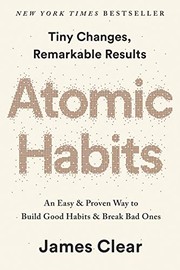
Who it's for: Almost everyone: people who set resolutions and drop them by February, and anyone who wants a system rather than a pep talk.
What it's like: Clear, well organized, built from short chapters with a summary at the end of each. Practical rather than inspirational.
The idea you'll keep: Change the environment and the identity, not your willpower. Clear’s four laws: make a habit obvious, attractive, easy and satisfying, and invert them to break a bad one.
Where to start: Read Part 1 on identity-based habits, then pick one habit and apply the “make it easy” chapter before finishing the book.
2. Tiny Habits — BJ Fogg (2019)
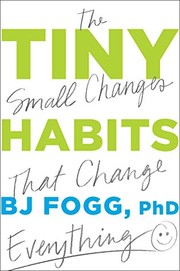
Who it's for: Readers who found Atomic Habits too ambitious, or who need gentle wins after a rough stretch.
What it's like: Warm and methodical, from the Stanford researcher who founded the Behavior Design Lab. More exercises than stories.
The idea you'll keep: Behavior happens when motivation, ability and a prompt meet at the same moment. Shrink the habit until it takes seconds, attach it to something you already do, and celebrate it immediately.
Where to start: Try the “after I ___, I will ___” recipe from the early chapters with one tiny habit for a week before reading on.
Best self-help books to change your thinking and mood
These two books are about how you talk to yourself. One is a clinical tool; the other is a frame.
3. Feeling Good: The New Mood Therapy — David D. Burns (1980)
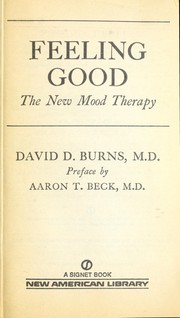
Who it's for: Anyone dealing with low mood, perfectionism or a loud inner critic.
What it's like: Long and workbook-like, written by a psychiatrist, with a preface by Aaron T. Beck, the founder of cognitive therapy. Dated in places, still practical.
The idea you'll keep: Feelings follow thoughts, and many painful thoughts contain predictable distortions, such as all-or-nothing thinking and mind reading. Write the thought down, name the distortion, write a fairer response.
Where to start: The chapters on the ten cognitive distortions and on the daily mood log. Do the written exercises; reading alone does far less.
Worth knowing: A book is not a substitute for care. If low mood lasts for weeks or you think about harming yourself, talk to a doctor or call or text 988 in the US.
Find Feeling Good: The New Mood Therapy on Amazon
4. Mindset — Carol S. Dweck (2006)
Who it's for: Students, parents, managers and anyone who avoids things they might be bad at.
What it's like: Accessible popular psychology from a Stanford researcher, built on contrasting examples from sport, school and business.
The idea you'll keep: People who see ability as fixed avoid challenges that could expose them; people who see it as something that grows treat setbacks as information.
Where to start: The opening chapters explain the two mindsets; the parenting and teaching chapters are the most useful if you are raising or managing others.
Worth knowing: The idea is helpful, but the measured effects are smaller than the book suggests. A 2018 meta-analysis in Psychological Science (Sisk et al., doi:10.1177/0956797617739704) found weak average effects of mindset interventions on academic achievement.
Best self-help books to ease anxiety and stress
Three different approaches, so pick by temperament. For a deeper list, see our best books for anxiety.
5. The Happiness Trap — Russ Harris (2007)
Who it's for: Overthinkers, and people who have tried positive thinking and found it made things worse.
What it's like: Friendly and plain, by a doctor and therapist who trains clinicians in Acceptance and Commitment Therapy (ACT). Short exercises in every chapter.
The idea you'll keep: Fighting unpleasant thoughts tends to strengthen them. Notice a thought as a thought (“I’m having the thought that…”), let it be there, and act on what you value anyway.
Where to start: Do the defusion exercises in the first part, then the values chapter.
Find The Happiness Trap on Amazon
6. Unwinding Anxiety — Judson Brewer (2021)
Who it's for: People whose worry runs on a loop, and anyone who liked Atomic Habits.
What it's like: A psychiatrist and neuroscientist explains anxiety as a habit loop, with case stories from his clinic and short practices.
The idea you'll keep: Worry is reinforced because it feels like doing something. Paying close, curious attention to what the worry loop actually gives you weakens its reward.
Where to start: Read Part 1 to map your own loop, then try the curiosity practice for a few days before moving on.
Find Unwinding Anxiety on Amazon
7. Burnout: The Secret to Unlocking the Stress Cycle — Emily Nagoski & Amelia Nagoski (2019)
Who it's for: Exhausted people, especially women juggling work and caregiving, who are told to “just relax”.
What it's like: Conversational and funny, written by twin sisters, a health educator and a musician.
The idea you'll keep: Dealing with a stressor is not the same as dealing with stress. Your body needs to complete the stress cycle through things like physical activity, slow breathing, laughter, affection or a good cry.
Where to start: The first chapter on completing the cycle is the one to read tonight.
Find Burnout: The Secret to Unlocking the Stress Cycle on Amazon
Best self-help books to improve relationships
Friendships, marriage, dating and hard conversations at work.
8. How to Win Friends and Influence People — Dale Carnegie (1936)
Who it's for: Anyone who wants to be easier to talk to, at work or anywhere else.
What it's like: Old-fashioned anecdotes and short principles. Modern readers find some of it corny; the principles still work.
The idea you'll keep: People care most about themselves. Be genuinely interested, remember their names, let them do most of the talking, and never criticize when you can understand instead.
Where to start: Part 2 on making people like you is the core. Read one principle a day and try it.
Find How to Win Friends and Influence People on Amazon
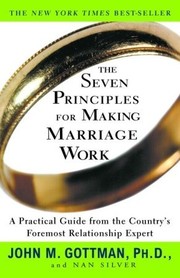
9. The Seven Principles for Making Marriage Work — John M. Gottman & Nan Silver (1999)
Who it's for: Couples at any stage, including happy ones who want to stay that way.
What it's like: Research-based but readable, with quizzes and exercises to do together.
The idea you'll keep: Gottman warns about four patterns that predict trouble (criticism, contempt, defensiveness and stonewalling) and shows that small daily moments of turning toward a partner matter more than big gestures.
Where to start: Take the early quizzes together, then read the chapters on turning toward and on managing conflict you cannot solve.
Find The Seven Principles for Making Marriage Work on Amazon
10. Attached — Amir Levine & Rachel Heller (2010)
Who it's for: Single people who keep picking the same kind of partner, and couples who feel stuck in a chase-and-retreat pattern.
What it's like: Pop science from a psychiatrist and a psychologist, applying attachment research to adult relationships.
The idea you'll keep: Most adults lean secure, anxious or avoidant in close relationships. Knowing your style, and your partner’s, explains a lot of conflict that otherwise feels personal.
Where to start: Take the questionnaire early in the book, then read the chapter for your style.
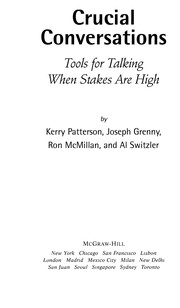
11. Crucial Conversations — Kerry Patterson et al. (2002)
Who it's for: Managers, partners and anyone who avoids difficult conversations or blows them up.
What it's like: A business-book format with acronyms and diagrams, but the examples come from homes as well as offices.
The idea you'll keep: When stakes are high and emotions run strong, people go silent or turn aggressive. Keep the conversation safe enough that everyone adds what they know to a shared pool of meaning.
Where to start: The chapters on starting with heart and on noticing when safety is at risk.
Find Crucial Conversations on Amazon
Best self-help books to get your money straight
Self-help for money is mostly behavior. For more, see our personal finance books.
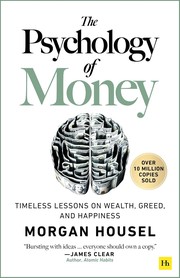
12. The Psychology of Money — Morgan Housel (2020)
Who it's for: Anyone who knows the advice and does not follow it, or who earns well and still feels anxious about money.
What it's like: A collection of short, story-first essays. Readable in one sitting.
The idea you'll keep: Doing well with money depends more on behavior than intelligence. Knowing when you have “enough” and staying invested through bad stretches beats clever picks.
Where to start: Read the chapters on “enough” and on saving, then the last chapter where Housel explains his own money choices.
Find The Psychology of Money on Amazon
13. Your Money or Your Life — Vicki Robin & Joe Dominguez (1992)
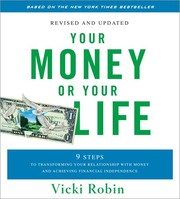
Who it's for: People who feel their spending is out of step with what they value, and anyone curious about financial independence.
What it's like: A nine-step program, more practical than inspirational. Later editions update the investment advice.
The idea you'll keep: Money is something you trade your life energy for. Work out your real hourly wage after commuting and work costs, and every purchase becomes a question of how many hours of your life it is worth.
Where to start: Do steps one to three before deciding whether the rest is for you.
Find Your Money or Your Life on Amazon
14. I Will Teach You to Be Rich — Ramit Sethi (2009)
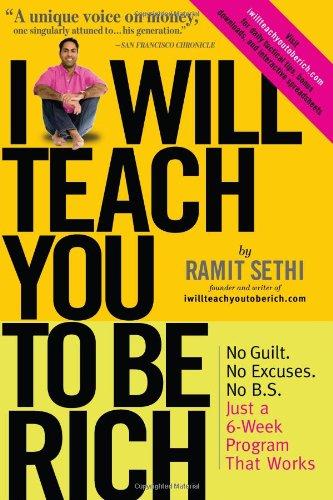
Who it's for: People in their twenties and thirties who want their finances set up and then mostly automated.
What it's like: Brash, funny and specific, organized as a six-week program. Get the second edition (2019).
The idea you'll keep: Spend extravagantly on the things you love and cut mercilessly on the things you do not, then automate saving and investing so good choices happen without willpower.
Where to start: Week one on credit cards and bank accounts, then the conscious spending plan chapter.
Find I Will Teach You to Be Rich on Amazon
Best self-help books to find meaning, focus and direction
For when the question is less “how” and more “what for”.
15. Man’s Search for Meaning — Viktor E. Frankl (1946)
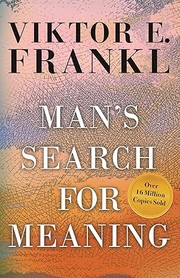
Who it's for: Anyone going through grief, illness or loss, and anyone asking what makes a life worth living.
What it's like: Short and unforgettable: the first half is Frankl’s account of surviving Nazi concentration camps; the second introduces logotherapy, the approach he developed. First published in German in 1946, in English in 1959.
The idea you'll keep: We cannot always choose our circumstances, but we can choose our attitude toward them. Meaning comes from work, love and how we bear unavoidable suffering.
Where to start: Read it straight through. It takes an evening.
Find Man’s Search for Meaning on Amazon
16. Four Thousand Weeks — Oliver Burkeman (2021)
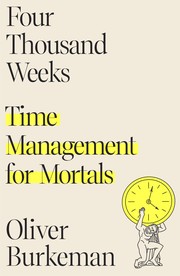
Who it's for: People who have read every productivity book and feel busier than ever.
What it's like: A witty, philosophical anti-productivity book from a former Guardian columnist.
The idea you'll keep: An average life lasts about four thousand weeks. You will never get everything done, so choose what to neglect on purpose instead of pretending you can do it all.
Where to start: The first chapters on the “efficiency trap”, then the closing list of practical tools.
Find Four Thousand Weeks on Amazon
17. Designing Your Life — Bill Burnett & Dave Evans (2016)
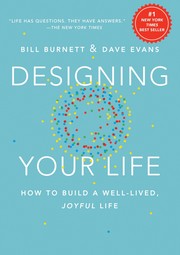
Who it's for: Graduates, career changers and anyone who feels they picked their path by accident.
What it's like: Hands-on, from the Stanford design professors behind a popular course of the same name. Exercises over theory.
The idea you'll keep: Treat your life like a design problem: prototype options with small experiments instead of hunting for the one right answer. Sketch three different five-year plans (“Odyssey plans”) before choosing.
Where to start: Do the Odyssey plan exercise; it is the part readers remember.
Find Designing Your Life on Amazon
18. Deep Work — Cal Newport (2016)
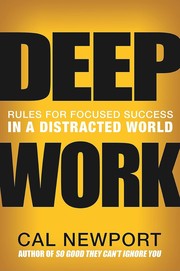
Who it's for: Knowledge workers, students and creatives whose days disappear into email and notifications.
What it's like: Argumentative and practical, by a Georgetown computer science professor. Strong opinions on social media.
The idea you'll keep: The ability to focus without distraction on demanding work is becoming rare and valuable. Schedule it, protect it and train it like a skill.
Where to start: Read Part 1 for the argument, then the rule on scheduling every minute of your day.
The newest one everyone is reading
19. The Let Them Theory — Mel Robbins (2024)
Who it's for: People-pleasers and anyone exhausted by trying to control how others behave.
What it's like: Conversational, built on Robbins’s podcast style, with expert interviews woven in. Published by Hay House in December 2024; a New York Times bestseller.
The idea you'll keep: Two words: “let them.” Let other people think and do what they will, then decide what you will do (“let me”).
Where to start: The first part explains the idea in full; the rest applies it to work, friendship, love and family.
Find The Let Them Theory on Amazon
If you only read ten
Asked for a top ten? These cover the most ground with the least overlap: Atomic Habits, Feeling Good, Man’s Search for Meaning, How to Win Friends and Influence People, The Psychology of Money, The Happiness Trap, The Seven Principles for Making Marriage Work, Four Thousand Weeks, Deep Work and Tiny Habits.
Want a push rather than a method? Our best motivational books list leans that way. If you are curious about the research behind these books, try the best psychology books on human behavior, and for older wisdom on how to live, the best philosophy books for beginners. All of our lists are collected on the best book lists page.
FAQ
What is the best self-help book to start with?
Atomic Habits by James Clear (2018). Most self-help goals come down to doing small things consistently, and it gives you a concrete system you can start the same day. If low mood is the problem, start with Feeling Good by David D. Burns instead.
What are the top 10 self-help books?
Our ten essentials: Atomic Habits, Feeling Good, Man’s Search for Meaning, How to Win Friends and Influence People, The Psychology of Money, The Happiness Trap, The Seven Principles for Making Marriage Work, Four Thousand Weeks, Deep Work and Tiny Habits.
What is the most popular self-help book of all time?
How to Win Friends and Influence People (1936) by Dale Carnegie is one of the bestselling self-help books ever and has stayed in print for nearly 90 years. Among recent books, Atomic Habits has been one of the bestselling self-help titles since 2018.
Are self-help books actually helpful?
The ones built on tested methods can be. Workbooks based on cognitive behavioral therapy and ACT, like Feeling Good and The Happiness Trap, use approaches therapists use. They help most when you do the exercises, not just read.
Are there self-help novels?
Yes. Readers often recommend The Alchemist by Paulo Coelho for its message about following a personal calling. If you prefer stories, Man’s Search for Meaning is nonfiction that reads like one.
What is the newest popular self-help book?
The Let Them Theory by Mel Robbins, published in December 2024, has been one of the most talked-about self-help books since.
As an Amazon Associate, we earn from qualifying purchases.
As an Amazon Associate, we earn from qualifying purchases.