Top Lists
The 19 Best Marketing Books to Read in 2026, Sorted by What You Need
Quick answer
The best marketing book for most people is This Is Marketing by Seth Godin (2018): short, clear and focused on the one decision that shapes everything else, who you are for. After that, read by need. For strategy, Positioning (1981). For persuasion, Cialdini’s Influence. For copy, Made to Stick. For digital, They Ask, You Answer. For a small business, Building a StoryBrand or $100M Offers. All 19 picks are below, grouped by the problem they solve.
As an Amazon Associate, we earn from qualifying purchases.
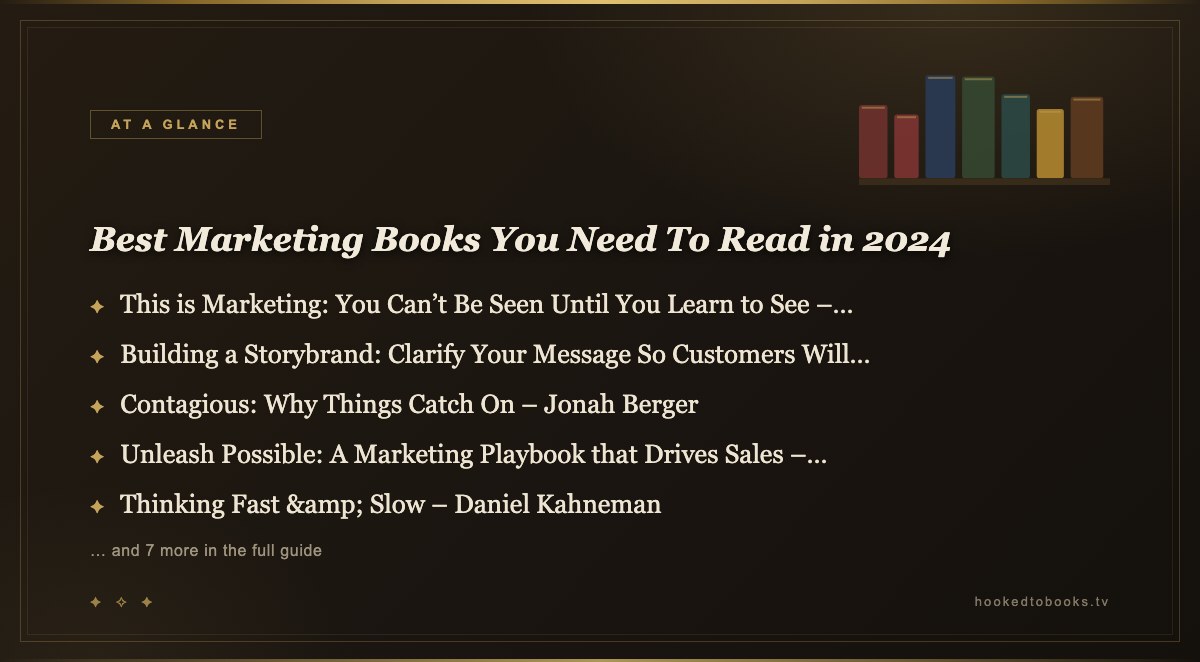
The best marketing books at a glance
Years are first publication. Where a newer edition is the one to buy, we say so in the pick.
| # | Book | Author | Year | Best for |
|---|---|---|---|---|
| 1 | This Is Marketing | Seth Godin | 2018 | Your first marketing book |
| 2 | Positioning: The Battle for Your Mind | Al Ries & Jack Trout | 1981 | Owning a place in the buyer’s head |
| 3 | How Brands Grow | Byron Sharp | 2010 | Evidence over marketing folklore |
| 4 | Obviously Awesome | April Dunford | 2019 | A step-by-step positioning process |
| 5 | Crossing the Chasm | Geoffrey A. Moore | 1991 | Launching technology products |
| 6 | Influence | Robert B. Cialdini | 1984 | Understanding why people say yes |
| 7 | Alchemy | Rory Sutherland | 2019 | Creative, counterintuitive thinking |
| 8 | Contagious: Why Things Catch On | Jonah Berger | 2013 | Word of mouth and shareability |
| 9 | Breakthrough Advertising | Eugene M. Schwartz | 1966 | Direct-response copywriting |
| 10 | Ogilvy on Advertising | David Ogilvy | 1983 | Advertising craft from a master |
| 11 | Made to Stick | Chip Heath & Dan Heath | 2007 | Making a message memorable |
| 12 | Everybody Writes | Ann Handley | 2014 | Everyday business writing |
| 13 | Building a StoryBrand | Donald Miller | 2017 | Clarifying your brand message |
| 14 | They Ask, You Answer | Marcus Sheridan | 2017 | Content marketing that sells |
| 15 | Inbound Marketing | Brian Halligan & Dharmesh Shah | 2009 | The inbound playbook |
| 16 | Hooked | Nir Eyal | 2014 | Habit-forming products and retention |
| 17 | Don’t Make Me Think, Revisited | Steve Krug | 2000 | Websites that convert |
| 18 | $100M Offers | Alex Hormozi | 2021 | Pricing and building offers |
| 19 | Duct Tape Marketing | John Jantsch | 2006 | A complete small business system |
| 20 | The 1-Page Marketing Plan | Allan Dib | 2016 | Writing a plan you will actually use |
How we chose these marketing books
We started from the books working marketers recommend most often across practitioner lists, course syllabi and our own reading, then cut anything that is mainly a tool tutorial (those date within a year or two). Every pick had to pass three tests: it teaches an idea you can apply without buying software, it is still in print, and it does something no other book on the list does better. Where a book’s research has been questioned since publication, we say so. We checked each title, author and first-publication year against Open Library records and publisher listings.
The list is organized by need rather than ranked, because the best marketing book for a SaaS founder is not the best one for a bakery. Read one from “Strategy and positioning” first, then jump to the section that matches your job.
Best marketing books for strategy and positioning
Read one of these before anything tactical. Strategy decides who you talk to; everything else decides how.
1. This Is Marketing — Seth Godin (2018)
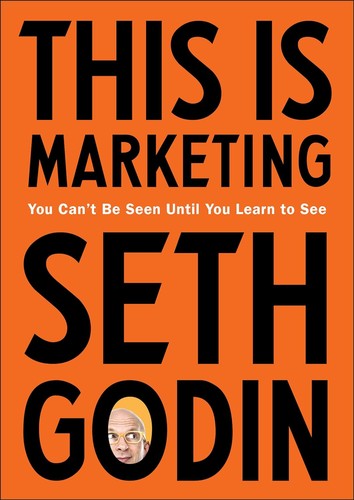
Who it's for: Anyone new to marketing, and founders who think marketing means ads.
What it's like: Short chapters, almost no jargon, closer to a manifesto than a textbook. You can finish it in two evenings.
The idea you'll keep: Pick the smallest group of people you can genuinely serve (Godin calls it the “smallest viable market”) and build something they would miss if it vanished. Reach comes after relevance, not before.
Where to start: Read it straight through, then write one sentence: “My product is for people who believe ___ and want ___.” If you cannot fill the blanks, reread the early chapters on who it is for.
Find This Is Marketing on Amazon
2. Positioning: The Battle for Your Mind — Al Ries & Jack Trout (1981)
Who it's for: Anyone naming a product, entering a crowded category or wondering why the better product keeps losing.
What it's like: A brisk, opinionated classic full of case studies from the 1970s (Avis, 7-Up, IBM). The examples are dated; the logic is not.
The idea you'll keep: You are not competing on the shelf; you are competing in the prospect’s mind, which only has room for a few names per category. Being first in a mind usually beats being better.
Where to start: The chapters on the “uncola” and on being number two are the core. The 20th-anniversary edition (2001) adds the authors’ own commentary on how their predictions aged.
Find Positioning: The Battle for Your Mind on Amazon
3. How Brands Grow — Byron Sharp (2010)
Who it's for: Marketers with a budget to spend, and anyone who has been told to “focus on loyal customers”.
What it's like: Drier and more data-heavy than anything else here, written from the Ehrenberg-Bass Institute’s research on buying behavior. Expect charts, not anecdotes.
The idea you'll keep: Brands mostly grow by reaching more light and occasional buyers, which requires being easy to think of (mental availability) and easy to buy (physical availability). Heavy loyalty programs rarely move the needle as much as reach does.
Where to start: Read the chapters on “double jeopardy” and mental availability first; they will change how you read every other book on this list.
Find How Brands Grow on Amazon
4. Obviously Awesome — April Dunford (2019)
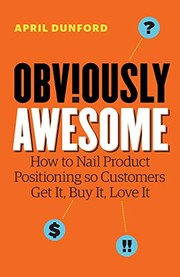
Who it's for: B2B and software teams whose product is good but whose homepage confuses people.
What it's like: A practical workbook disguised as a business book, written by a former tech executive who now runs positioning workshops.
The idea you'll keep: Positioning starts with what customers would use if you did not exist (their real alternatives), then works forward to the features only you have and the value those features unlock.
Where to start: Do the exercises with your team, in order. The section on choosing a market frame is the part most people skip and later regret.
Find Obviously Awesome on Amazon
5. Crossing the Chasm — Geoffrey A. Moore (1991)
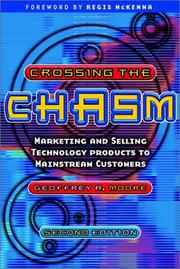
Who it's for: Startup founders and product marketers selling something new and technical.
What it's like: A strategy classic organized around one diagram, updated in later editions with newer company examples.
The idea you'll keep: Enthusiasts and early adopters buy for different reasons than the pragmatic majority. To cross from one group to the other, win one narrow niche completely, then use it as a beachhead.
Where to start: Read the first three chapters on the adoption life cycle, then the chapter on targeting the point of attack.
Find Crossing the Chasm on Amazon
Best marketing books for psychology and persuasion
Marketing is applied psychology. These explain why people choose, share and say yes.
6. Influence — Robert B. Cialdini (1984)
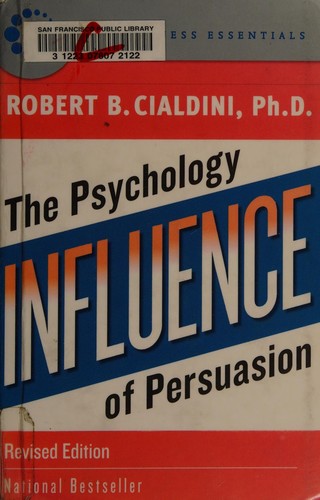
Who it's for: Everyone in marketing or sales, and anyone who wants to notice when persuasion is being used on them.
What it's like: A social psychologist’s tour of the research, mixed with stories from the time he spent training as a salesperson to see the tactics up close.
The idea you'll keep: Six shortcuts drive most compliance: reciprocity, commitment and consistency, social proof, authority, liking and scarcity. The 2021 new and expanded edition adds a seventh, unity: the pull of shared identity.
Where to start: Get the 2021 edition if you are buying new. Read the reciprocity and social proof chapters first; they are the ones you will use this week.
Worth knowing: Some studies Cialdini cites come from social psychology’s pre-2015 era, before larger replication projects. Treat effect sizes as directional. Our psychology books guide covers which findings have held up.
7. Alchemy — Rory Sutherland (2019)
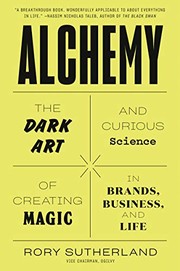
Who it's for: Marketers stuck in spreadsheet logic and anyone who enjoys a funny, argumentative writer.
What it's like: A long, digressive and very entertaining essay from the vice chairman of Ogilvy UK. Less a method than a way of seeing.
The idea you'll keep: People do not behave logically, they behave “psycho-logically”, so the cheapest fix is often a change in perception rather than in the product. The opposite of a good idea can also be a good idea.
Where to start: Dip in anywhere. If you only read one part, read the sections on signalling and on why costly gestures make people trust a brand.
8. Contagious: Why Things Catch On — Jonah Berger (2013)
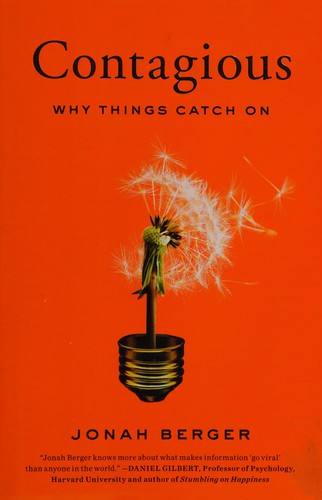
Who it's for: Content, social and brand marketers who want people to talk about them without a giant ad budget.
What it's like: Pop-science style from a Wharton professor: one framework, lots of short case studies.
The idea you'll keep: Ideas spread when they give people social currency, are triggered by everyday cues, stir emotion, are publicly visible, carry practical value and sit inside a story. Berger calls the set STEPPS.
Where to start: Score your current campaign against the six STEPPS before you read the case studies; it makes the book a working checklist.
Find Contagious: Why Things Catch On on Amazon
Best marketing books for copywriting and messaging
The words still do most of the selling, on a billboard or in a subject line.
9. Breakthrough Advertising — Eugene M. Schwartz (1966)
Who it's for: Copywriters, email and landing-page writers, and anyone who sells with words.
What it's like: Dense, old-fashioned and expensive to buy new, but copywriters still pass it around because it explains why ads work, not only how.
The idea you'll keep: You cannot create desire, only channel desire that already exists. The right headline depends on how aware the reader already is: of the problem, of solutions, of your product.
Where to start: Read the chapters on the five levels of awareness and on market sophistication, then rewrite one of your own headlines for each level.
Find Breakthrough Advertising on Amazon
10. Ogilvy on Advertising — David Ogilvy (1983)
Who it's for: Anyone writing ads, packaging or brand copy.
What it's like: Practical, bossy, full of pictures of real ads, written late in Ogilvy’s career. Some media advice is obsolete; the craft advice is not.
The idea you'll keep: Find out what actually sells, then say it plainly and specifically. Because far more people read a headline than the copy under it, Ogilvy made the headline carry the promise.
Where to start: The chapters on how to produce advertising that sells and on writing headlines and body copy.
Find Ogilvy on Advertising on Amazon
11. Made to Stick — Chip Heath & Dan Heath (2007)
Who it's for: Anyone who presents, pitches, teaches or writes product messaging.
What it's like: Friendly, story-driven, with practical “clinics” that rewrite weak messages into strong ones.
The idea you'll keep: Experts suffer from the “curse of knowledge”: they forget what not knowing feels like. Sticky ideas are Simple, Unexpected, Concrete, Credible, Emotional and told as Stories.
Where to start: Read the introduction and the chapter on Simple, then try one clinic on your own elevator pitch.
12. Everybody Writes — Ann Handley (2014)
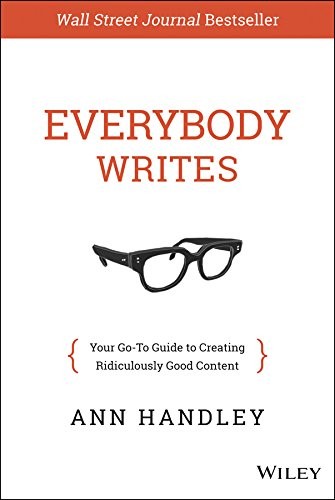
Who it's for: Content marketers, founders who write their own emails and anyone who freezes at a blank page.
What it's like: Short, funny chapters you can read in any order, part writing class and part style guide. An expanded second edition is available.
The idea you'll keep: Writing is a habit, not a talent. Get an ugly first draft down fast, then do the real work in rewriting for one specific reader.
Where to start: Read the first section on writing rules, then keep the book on your desk as a reference.
Find Everybody Writes on Amazon
13. Building a StoryBrand — Donald Miller (2017)
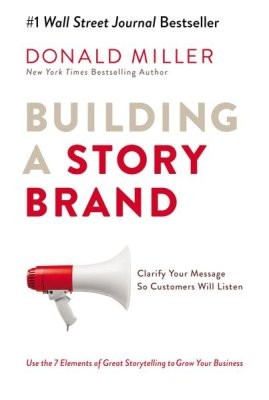
Who it's for: Small business owners and marketers whose website talks about themselves instead of the customer.
What it's like: One framework explained at length, with worksheets. Repetitive by the end, but easy to apply the same day.
The idea you'll keep: Your customer is the hero and your brand is the guide. A clear message names what they want, the problem in the way, your plan, a call to action, and what success and failure look like.
Where to start: Read Part 1, then fill in the one-page brand script before reading Part 2. Rewrite your homepage headline using the result.
Find Building a StoryBrand on Amazon
Best marketing books for digital, content and product
The channels change every year; these books teach the principles under them.
14. They Ask, You Answer — Marcus Sheridan (2017)
Who it's for: Service businesses and B2B companies that want inbound leads from search.
What it's like: Plain-spoken and story-based: the author used the approach to save his pool company, River Pools and Spas, during the 2008 downturn.
The idea you'll keep: Answer every question buyers actually ask, honestly and in public, including the ones competitors avoid: price, problems, comparisons, reviews and “best of” lists.
Where to start: Read the chapter on the “Big 5” topics, then list 20 questions your customers asked last month. Those are your next 20 articles.
Find They Ask, You Answer on Amazon
15. Inbound Marketing — Brian Halligan & Dharmesh Shah (2009)
Who it's for: Readers who searched for it by name, and marketers new to SEO, content and lead nurturing.
What it's like: A primer from HubSpot’s founders. The “Revised and Updated” edition (2014) is the one to get; tactics have moved on, but the model still frames most content marketing.
The idea you'll keep: Stop interrupting people and earn attention instead: get found through useful content, convert visitors into leads, then nurture them until they are ready to buy.
Where to start: Read the revised edition’s chapters on creating content and getting found in search, and skim the tool-specific parts.
Find Inbound Marketing on Amazon
16. Hooked — Nir Eyal (2014)
Who it's for: Product managers, app builders and marketers responsible for retention.
What it's like: A tight, practical model with examples from consumer tech companies.
The idea you'll keep: Habit-forming products cycle users through a trigger, an action, a variable reward and an investment that makes the next loop more likely.
Where to start: Read the four core chapters in order, then the chapter on the morality of manipulation, which is the one most summaries leave out.
17. Don’t Make Me Think, Revisited — Steve Krug (2000)
Who it's for: Anyone responsible for a website or landing page, technical or not.
What it's like: Short, illustrated and funny. The Revisited edition (2014) adds mobile. You can read it in an afternoon.
The idea you'll keep: Visitors do not read, they scan, pick the first reasonable option and muddle through. Every question a page makes them stop and think about costs you a little attention.
Where to start: Read the first five chapters, then watch a friend try to buy something on your site without helping them.
Find Don’t Make Me Think, Revisited on Amazon
Best marketing books for small business and offers
For owners who do the marketing themselves, between everything else.
18. $100M Offers — Alex Hormozi (2021)
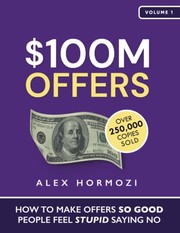
Who it's for: Small business owners, coaches and service providers who compete on price.
What it's like: Self-published, blunt and very direct, written in short punchy sections. Polarizing in tone; useful in substance.
The idea you'll keep: Value is the dream outcome times the likelihood of achieving it, divided by the time it takes and the effort it costs. Raise the top, shrink the bottom, and price stops being the main objection.
Where to start: Read the value equation section, then rebuild one of your existing offers using it. The companion $100M Leads (2023) covers getting attention.
19. Duct Tape Marketing — John Jantsch (2006)
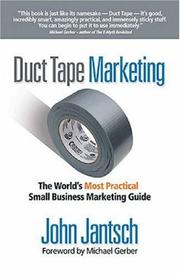
Who it's for: Owners of local and service businesses who do their own marketing.
What it's like: A how-to manual, practical rather than inspiring, with a revised edition (2011) that updates the online chapters.
The idea you'll keep: Marketing is a system, not a series of one-off tactics. Jantsch’s “marketing hourglass” moves a customer from know, like and trust to try, buy, repeat and refer.
Where to start: Map your current customer journey onto the hourglass and fix the first stage that leaks.
Find Duct Tape Marketing on Amazon
20. The 1-Page Marketing Plan — Allan Dib (2016)
Who it's for: Solo founders and small teams who have never written a marketing plan.
What it's like: A practical guide organized around a single nine-box grid; light on theory, heavy on checklists.
The idea you'll keep: Every customer passes through before, during and after stages: prospect, lead, customer. Plan one thing for each square and you have a working marketing plan on one page.
Where to start: Draw the nine squares on paper and fill them as you read; the book is built to be done, not just read.
Find The 1-Page Marketing Plan on Amazon
Three reading paths
- Brand-new to marketing: This Is Marketing → Positioning → Made to Stick → Influence.
- Running a small business: Building a StoryBrand → $100M Offers → Duct Tape Marketing → They Ask, You Answer.
- Marketing a tech product: Obviously Awesome → Crossing the Chasm → Hooked → Don’t Make Me Think.
Starting a company from zero? Our list of the best books for starting a business covers the operations and money side, and our business books for women collects founder stories and career guides. For the research behind persuasion, see the best psychology books on human behavior, and for broader reading, the best nonfiction books. Every list we publish lives on the best book lists hub.
FAQ
What is the best marketing book for beginners?
This Is Marketing by Seth Godin (2018). It is short, jargon-free and teaches the habit that matters most early on: choosing exactly who you serve. Follow it with Positioning by Al Ries and Jack Trout.
What is the best book on marketing strategy?
For strategy, read Positioning (1981) for the core idea, How Brands Grow (2010) for evidence on how brands actually gain share, and Crossing the Chasm (1991) if you are launching a technology product.
Are old marketing books like Ogilvy on Advertising still worth reading?
Yes, for craft. The media examples are dated, but advice about headlines, research and respecting the reader has not changed. Pair one classic with one current book, such as They Ask, You Answer.
What is the best book for digital and inbound marketing?
They Ask, You Answer by Marcus Sheridan is the most practical. Inbound Marketing by Brian Halligan and Dharmesh Shah (revised edition, 2014) explains the model behind it.
Which marketing book should a small business owner read first?
Building a StoryBrand if your message is unclear, $100M Offers if you keep competing on price, and Duct Tape Marketing if you need a whole system.
What is the best book to learn copywriting?
Start with Made to Stick for clarity, then Breakthrough Advertising by Eugene Schwartz for the theory of direct-response copy.
As an Amazon Associate, we earn from qualifying purchases.