Spiritual & Philosophical
The 15 Best Psychology Books on Human Behavior (and What Has Held Up)
Quick answer
If you read one psychology book on human behavior, make it Thinking, Fast and Slow by Daniel Kahneman (2011). It explains why our snap judgments go wrong in predictable ways, and why the slow, careful part of the mind often fails to catch them. Read it knowing one chapter (on priming) has not replicated, as Kahneman acknowledged. For a lighter start, try Predictably Irrational; for the biggest picture, from neurons to culture, Behave by Robert Sapolsky. Below, 15 books grouped by the question they answer, with each key idea in plain words and a note wherever the evidence has shifted.
As an Amazon Associate, we earn from qualifying purchases.
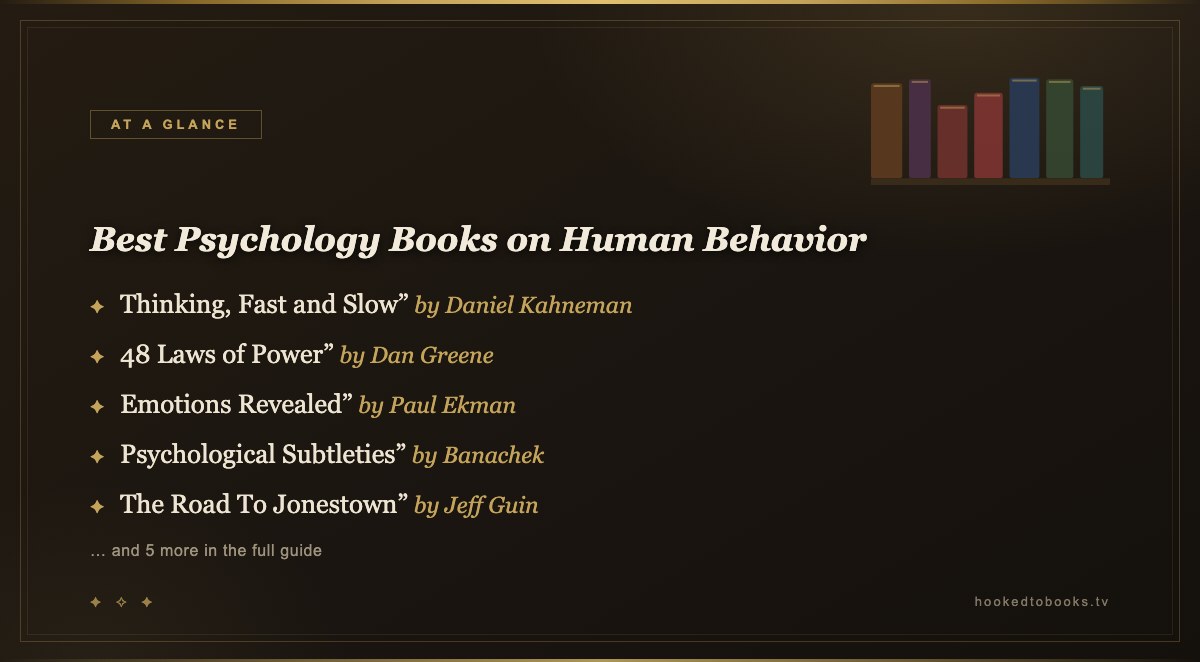
The best psychology books on human behavior at a glance
| # | Book | Author | Year | Best for |
|---|---|---|---|---|
| 1 | Thinking, Fast and Slow | Daniel Kahneman | 2011 | The one book on everyday irrationality |
| 2 | Predictably Irrational | Dan Ariely | 2008 | A light, fun entry point |
| 3 | Nudge | Richard H. Thaler & Cass R. Sunstein | 2008 | How choices are designed |
| 4 | Stumbling on Happiness | Daniel Gilbert | 2006 | Why we mispredict what will make us happy |
| 5 | Influence | Robert B. Cialdini | 1984 | Persuasion and compliance |
| 6 | The Person and the Situation | Lee Ross & Richard E. Nisbett | 1991 | The classic case for context |
| 7 | Mistakes Were Made (But Not by Me) | Carol Tavris & Elliot Aronson | 2007 | Self-justification and why we double down |
| 8 | Obedience to Authority | Stanley Milgram | 1974 | The famous shock experiments, in the researcher’s words |
| 9 | The Lucifer Effect | Philip Zimbardo | 2007 | Situational evil, read with care |
| 10 | Behave | Robert M. Sapolsky | 2017 | The big, all-in-one explanation |
| 11 | The Righteous Mind | Jonathan Haidt | 2012 | Morality and political division |
| 12 | How Emotions Are Made | Lisa Feldman Barrett | 2017 | A challenge to how we think about feelings |
| 13 | Quiet | Susan Cain | 2012 | Introverts, and anyone who works with them |
| 14 | The Elephant in the Brain | Kevin Simler & Robin Hanson | 2018 | Hidden motives in everyday life |
| 15 | The Undoing Project | Michael Lewis | 2016 | The friendship that built behavioral economics |
How we chose, and why we flag replication
We picked popular psychology books, written for general readers, that answer the question behind this search: why do people behave the way they do? Each pick had to be written or grounded by researchers in the field and explain an idea you can use to understand yourself or others.
Psychology has changed since many of these books came out. From around 2011, large replication projects found that a share of famous findings did not repeat when tested again with bigger samples. That does not make these books worthless; it means some chapters deserve more trust than others. Where a well-known claim has been seriously challenged, we say so in a “worth knowing” note and link the source. We left out books built mainly on discredited methods, such as neuro-linguistic programming. Titles, authors and first-publication years were checked against Open Library and publisher records.
How we make decisions
Why smart people make predictable mistakes.
1. Thinking, Fast and Slow — Daniel Kahneman (2011)
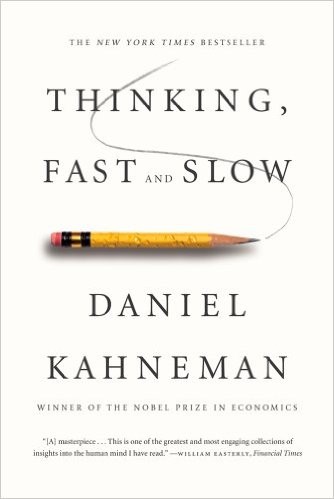
Who it's for: Anyone who wants a single book that explains how judgment goes wrong, from investors to doctors to voters.
What it's like: Long and demanding, written by the Nobel-winning psychologist who, with Amos Tversky, founded the study of judgment biases. Short chapters, many small thought experiments you can try on yourself.
The idea you'll keep: Two modes of thinking run your life: a fast, automatic “System 1” that jumps to answers and a slow, effortful “System 2” that is lazy about checking them. Anchoring, loss aversion and judging by what comes to mind easily all follow from that split.
Where to start: Parts 1 and 2 are the core. Part 4 on loss aversion and prospect theory is the part economists still cite most.
Worth knowing: Not everything has aged well. In 2017 a reanalysis on the Replicability-Index blog by Ulrich Schimmack, Moritz Heene and Kamini Kesavan found that most studies behind the book’s priming chapter (chapter 4) had low statistical power. Kahneman replied that he had “placed too much faith in underpowered studies” (Retraction Watch, February 2017). The ego-depletion research cited in chapter 3 also failed a 23-lab preregistered replication (Hagger et al., Perspectives on Psychological Science, 2016, doi:10.1177/1745691616652873). The heuristics-and-biases core in Parts 2 to 4 rests on much firmer ground.
Find Thinking, Fast and Slow on Amazon
2. Predictably Irrational — Dan Ariely (2008)
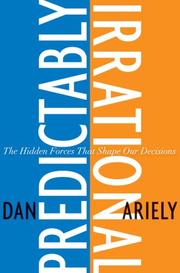
Who it's for: Readers who want behavioral economics in story form, without equations.
What it's like: Breezy and anecdotal: each chapter is built around one of the author’s experiments, such as how a useless third option changes which magazine subscription people choose.
The idea you'll keep: We judge value by comparison, not in absolute terms, so a decoy option, a “free” offer or a first price we saw can steer a choice we think is our own.
Where to start: The chapters on relativity, on the power of “free” and on social versus market norms.
Worth knowing: Read it as illustration rather than proof. A separate 2012 paper co-authored by Ariely (not part of this book) was retracted by PNAS in September 2021 (retraction notice) after analysts at Data Colada concluded that its field-experiment data had been fabricated.
Find Predictably Irrational on Amazon
3. Nudge — Richard H. Thaler & Cass R. Sunstein (2008)
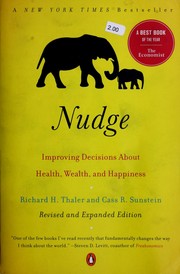
Who it's for: Policy readers, designers and managers who set defaults for other people.
What it's like: Readable and example-heavy, by an economist who later won a Nobel and a legal scholar. A revised “Final Edition” appeared in 2021.
The idea you'll keep: There is no neutral way to present a choice. Defaults, order and framing (the “choice architecture”) shape what people pick, so design them to help people do what they would choose on reflection, such as saving for retirement.
Where to start: The early chapters on defaults and on “humans versus econs”.
Worth knowing: Defaults have strong evidence behind them; many other nudges have smaller effects than early studies suggested. A 2022 PNAS paper (Maier et al., doi:10.1073/pnas.2200300119) argued that once publication bias is corrected for, the average effect of nudges across studies is hard to distinguish from zero.
4. Stumbling on Happiness — Daniel Gilbert (2006)
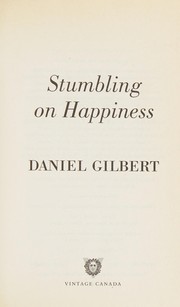
Who it's for: Anyone facing a big decision about a job, a move or a relationship.
What it's like: Funny, conversational and full of footnotes, from a Harvard psychologist.
The idea you'll keep: Imagination is a poor guide to future feelings: it fills in details, leaves out others and assumes we will feel the way we do now. A better predictor is asking someone who is already living the future you are considering.
Where to start: Read it straight through; the jokes carry you.
Find Stumbling on Happiness on Amazon
How situations and groups shape us
The strongest lesson of social psychology is that context drives behavior more than we expect, and these books also show how some famous evidence has been challenged.
5. Influence — Robert B. Cialdini (1984)
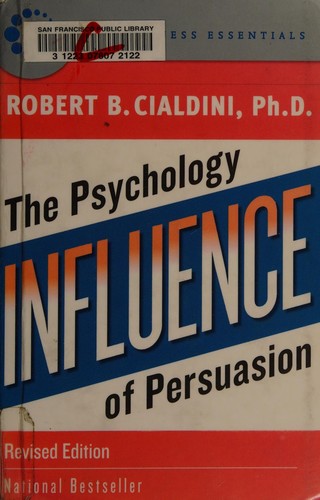
Who it's for: Anyone who wants to understand, or resist, how people get others to say yes.
What it's like: A research tour mixed with stories from sales and fundraising training the author joined to study tactics firsthand.
The idea you'll keep: Reciprocity, commitment and consistency, social proof, authority, liking and scarcity work as mental shortcuts; the 2021 expanded edition adds unity, the pull of shared identity.
Where to start: Reciprocity and social proof first. For applying it at work, see our best marketing books.
6. The Person and the Situation — Lee Ross & Richard E. Nisbett (1991)
Who it's for: Serious readers who want the foundations of social psychology from two of its leading researchers.
What it's like: Closer to a readable textbook than a pop book. Reissued with a new foreword by Malcolm Gladwell.
The idea you'll keep: We explain other people’s behavior by their character and underrate the situation they were in (the “fundamental attribution error”). Small situational details, which the authors call channel factors, can matter enormously.
Where to start: The first chapter and the chapter on the situation; skim the methods discussions.
Find The Person and the Situation on Amazon
7. Mistakes Were Made (But Not by Me) — Carol Tavris & Elliot Aronson (2007)
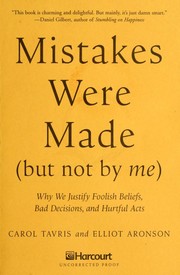
Who it's for: Anyone puzzled by why people, including themselves, defend bad decisions.
What it's like: Lively and story-driven, by a social psychologist and one of the researchers who built cognitive dissonance theory. Later editions update the examples.
The idea you'll keep: When our actions clash with our self-image, we feel dissonance and usually ease it by justifying the action rather than admitting error. Each small justification pushes us further down a path.
Where to start: The opening chapters on dissonance and the “pyramid of choice”, then the chapters on memory and on couples.
Find Mistakes Were Made (But Not by Me) on Amazon
8. Obedience to Authority — Stanley Milgram (1974)
Who it's for: Readers who want the primary source behind one of psychology’s most cited studies.
What it's like: Milgram’s own account of his 1960s experiments, including the many variations most summaries skip.
The idea you'll keep: Ordinary people will often follow instructions to harm someone when an authority takes responsibility, and small changes, such as the victim’s closeness or the experimenter’s presence, change obedience a lot.
Where to start: Read the variation chapters closely; they are the real findings.
Worth knowing: Gina Perry’s Behind the Shock Machine (2012) went through Milgram’s archives and argues that procedures varied and many participants doubted the setup. Read the two together.
Find Obedience to Authority on Amazon
9. The Lucifer Effect — Philip Zimbardo (2007)
Who it's for: Readers interested in the Stanford Prison Experiment and the abuses at Abu Ghraib.
What it's like: Long and detailed: much of the book is Zimbardo’s day-by-day account of the 1971 study, followed by his analysis of Abu Ghraib.
The idea you'll keep: Zimbardo argues that bad systems and roles can lead good people to do terrible things.
Where to start: Read the later chapters on systems and on resisting situational pressure, after reading the critique below.
Worth knowing: The experiment has been heavily criticized. A 2019 article in American Psychologist (Le Texier, “Debunking the Stanford Prison Experiment,” doi:10.1037/amp0000401) used archival material to argue that guards were coached on how to behave. Treat the book as a historical document and an argument, not settled science.
Find The Lucifer Effect on Amazon
Biology, emotion and hidden motives
Why we are the way we are, from neurons to evolution.
10. Behave — Robert M. Sapolsky (2017)
Who it's for: Readers who want the full picture and are happy with a long, science-heavy book.
What it's like: Huge, funny and footnoted, by a Stanford neuroendocrinologist. It moves outward in time from the brain to evolution.
The idea you'll keep: To explain any behavior, ask what happened a second before (the brain), hours before (hormones), years before (childhood), and generations before (genes, culture, evolution). No single level explains it alone.
Where to start: The first chapters on the brain set up everything; if it gets heavy, skip ahead to the chapters on us-versus-them and on morality.
11. The Righteous Mind — Jonathan Haidt (2012)
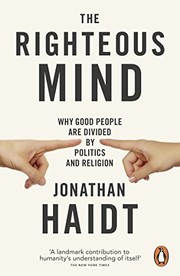
Who it's for: Anyone baffled by people on the other side of politics or religion.
What it's like: Clear and engaging, built around one metaphor and a lot of the author’s own research.
The idea you'll keep: Moral judgment is mostly intuition, with reasoning arriving afterward to justify it: the rider (reason) serves the elephant (intuition). Different groups weigh different moral foundations, such as care, fairness, loyalty, authority and sanctity.
Where to start: Part 1 on intuition first; Part 2 on moral foundations is the most discussed.
Find The Righteous Mind on Amazon
12. How Emotions Are Made — Lisa Feldman Barrett (2017)
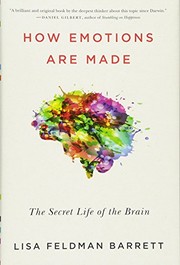
Who it's for: Readers who want a current, contrarian take on emotion science.
What it's like: Argumentative and science-dense, by a neuroscientist and psychologist.
The idea you'll keep: Emotions are not hardwired reactions with universal facial expressions. The brain constructs them on the fly by predicting what bodily sensations mean, based on past experience and culture.
Where to start: The first three chapters lay out the theory; the later ones apply it to health and law.
Worth knowing: Her theory of constructed emotion is influential but contested; many researchers still defend the more traditional view of basic emotions.
Find How Emotions Are Made on Amazon
13. Quiet — Susan Cain (2012)
Who it's for: Introverts, their partners and managers, and teachers.
What it's like: Warm, well reported, and mixing research with interviews.
The idea you'll keep: Many workplaces and schools reward an “extrovert ideal” of constant talk and group work, and lose the strengths of people who think best alone.
Where to start: The chapters on the extrovert ideal and on temperament research.
14. The Elephant in the Brain — Kevin Simler & Robin Hanson (2018)
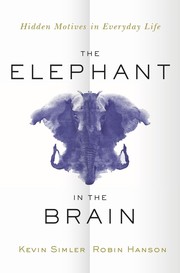
Who it's for: Readers who enjoyed Thinking, Fast and Slow and want something more provocative.
What it's like: Sharp, uncomfortable and well argued, by a writer and an economist.
The idea you'll keep: Many of our actions serve motives we prefer not to admit, especially showing off to others, and our brains hide those motives even from ourselves. The authors apply this to medicine, education, charity and politics.
Where to start: Part 1 explains the theory; then pick the Part 2 chapter about whatever you do most.
Find The Elephant in the Brain on Amazon
The story behind the science
15. The Undoing Project — Michael Lewis (2016)
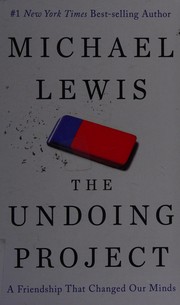
Who it's for: Readers who prefer narrative to theory, or who bounced off Thinking, Fast and Slow.
What it's like: Biography with the pace of a novel, by the author of Moneyball.
The idea you'll keep: The theories in Kahneman’s book came out of a partnership with Amos Tversky, and the ideas were shaped by their very different personalities.
Where to start: Read it before Thinking, Fast and Slow if you want the ideas to arrive with faces attached.
Find The Undoing Project on Amazon
What to read next
If these leave you wanting the “how to live” side, our best philosophy books for beginners and best self-help books pick up where psychology stops. If worry is the behavior you want to understand in yourself, see the best books for anxiety. For more science and history writing, browse the best nonfiction books, or every list on our best book lists hub.
FAQ
What is the best psychology book on human behavior?
Thinking, Fast and Slow by Daniel Kahneman (2011). It explains more everyday behavior than any other single book. Read it knowing the priming chapter has not held up, which Kahneman himself acknowledged in 2017.
What is a good psychology book for beginners?
Start with Predictably Irrational or Stumbling on Happiness; both are short and funny. Then move to Influence and Thinking, Fast and Slow.
Which psychology book best explains why people act the way they do?
Behave by Robert Sapolsky (2017) gives the most complete answer, from brain chemistry to culture and evolution. For a shorter version focused on social behavior, read The Person and the Situation.
Is Thinking, Fast and Slow still accurate?
Mostly. Its core work on biases and loss aversion is well supported, but studies in the priming chapter and the ego-depletion research it cites have failed to replicate.
What is the replication crisis in psychology?
From around 2011, researchers found that many published findings did not repeat when tested again. A 2015 project in Science repeated 100 studies and got a significant result in only about a third of them (Open Science Collaboration, doi:10.1126/science.aac4716).
Is the Stanford Prison Experiment real science?
It happened in 1971, but its scientific value is disputed. Critics, including a 2019 American Psychologist article, argue the guards were coached, so it shows less about situations than it once claimed.
As an Amazon Associate, we earn from qualifying purchases.
As an Amazon Associate, we earn from qualifying purchases.