Best Books
Best Books for Anxiety, Evidence-Based Picks
Quick answer
Read Feeling Good by David D. Burns first. Burns, a psychologist trained under Aaron Beck (the psychiatrist who developed cognitive behavioral therapy), wrote the book that's introduced more general readers to CBT techniques than almost any other.
A book is not a substitute for care. If anxiety is affecting your daily life, sleep, or physical health, or if you're having panic attacks, please talk to a doctor or a licensed mental health professional — these books are a starting point for understanding and self-help tools, not a diagnosis or treatment plan.
As an Amazon Associate, we earn from qualifying purchases.
We only included books here written by a licensed clinician, a researcher with a relevant doctorate, or a journalist doing serious, sourced reporting on the science — not general wellness influencers. Every pick below names the author's actual background so you know what kind of book you're getting.
How We Chose
Every pick had to have a named, verifiable author with real clinical or research credentials (or, for the one journalistic pick, serious sourced reporting), and a clear grounding in an established approach — cognitive behavioral therapy, a physician-developed method, or current anxiety research. We verified every author's credentials and publication year against Wikipedia as of October 2026. We left out several very popular titles we could not verify to this standard in time.
Cognitive behavioral therapy (CBT)
1. Feeling Good by David D. Burns
A clinical psychologist trained by Aaron Beck walks through the cognitive techniques behind CBT — identifying and challenging distorted thoughts — in plain language aimed at general readers.
- Author's credentials: David D. Burns, psychologist, trained directly under Aaron Beck.
- Approach: cognitive behavioral therapy (CBT).
- Where to start: Feeling Good: The New Mood Therapy (1980), a standalone.
2. The Anxiety and Worry Workbook by David A. Clark and Aaron T. Beck
A structured, exercise-based workbook co-written by Aaron Beck himself, the psychiatrist who originated cognitive therapy, applying CBT specifically to anxiety and chronic worry rather than depression.
- Author's credentials: David A. Clark, clinical psychologist; Aaron T. Beck, psychiatrist and the founder of cognitive behavioral therapy, named one of the five most influential psychotherapists of all time by American Psychologist.
- Approach: CBT, in workbook/exercise format.
- Where to start: The Anxiety and Worry Workbook (2011), a standalone.
3. The Anxiety and Phobia Workbook by Edmund J. Bourne
A practical workbook covering specific techniques for panic, phobias and generalized anxiety, written by a former clinic director with decades in the field.
- Author's credentials: Edmund J. Bourne, Ph.D. in Behavioral Sciences, former director of The Anxiety Treatment Center in California.
- Approach: CBT-informed, workbook/exercise format; won the Benjamin Franklin Book Award for Excellence in Psychology.
- Where to start: The Anxiety and Phobia Workbook (1990), a standalone.
Other clinically grounded approaches
4. Hope and Help for Your Nerves by Claire Weekes
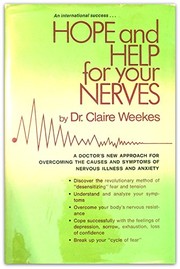
An Australian physician's approach to panic and chronic nervous symptoms, built around a sequence often summarized as facing the fear, accepting it rather than fighting it, letting the body's reaction float past, and letting time pass.
- Author's credentials: Claire Weekes, Australian general practitioner (physician).
- Approach: a physician-developed method that predates CBT; still cited by some clinicians today, though it has not been tested with the same volume of modern clinical trials as CBT.
- Where to start: Hope and Help for Your Nerves (1962), a standalone.
5. Unwinding Anxiety by Judson Brewer
A psychiatrist and neuroscientist explains anxiety as a learned habit loop and applies mindfulness-based techniques, backed by his own research, to interrupt it.
- Author's credentials: Judson Brewer, M.D., Ph.D., psychiatrist and neuroscientist, director of research and innovation at Brown University's Mindfulness Center.
- Approach: mindfulness and habit-change research.
- Where to start: Unwinding Anxiety (2021), a standalone.
Memoir and reporting, not a workbook
6. My Age of Anxiety by Scott Stossel
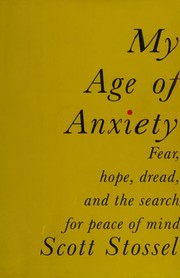
A journalist and longtime sufferer of severe anxiety and phobias weaves his own history with the history of anxiety as a medical diagnosis and reported interviews with researchers and clinicians.
- Author's credentials: Scott Stossel, journalist, national editor of The Atlantic. This is a reported memoir, not a clinical guide.
- Approach: personal account plus sourced reporting on the science and history of anxiety treatment.
- Where to start: My Age of Anxiety (2014), a standalone.
If you only read one from each group
- CBT, general: Feeling Good.
- CBT, workbook format: The Anxiety and Worry Workbook.
- Memoir and reporting: My Age of Anxiety.
Again: these are a starting point, not a treatment plan. If you're not sure where to start finding professional support, a primary care doctor is a reasonable first call. Want more on building better habits generally? See our best self-help books list, or browse every list on our best book lists hub.
FAQ
What is the best book for anxiety based on CBT?
Feeling Good by David D. Burns, a psychologist trained by Aaron Beck (the psychiatrist who developed cognitive behavioral therapy), is the most widely recommended CBT-based book for anxiety and depression.
Are self-help books for anxiety a substitute for therapy?
No. These books can teach real techniques used in therapy, but a book is not a substitute for an evaluation and care from a licensed mental health professional, especially for panic attacks, severe anxiety or anxiety alongside other symptoms.
What is a good anxiety book that isn't a workbook?
My Age of Anxiety by journalist Scott Stossel is a researched memoir rather than a workbook, mixing his own experience with the history and science of anxiety treatment.
What is Hope and Help for Your Nerves about?
Written by physician Claire Weekes in 1962, it introduced a widely cited approach to panic (sometimes summarized as "facing, accepting, floating, and letting time pass") that predates modern CBT but is still recommended by some clinicians today.
What is a mindfulness-based book for anxiety?
Unwinding Anxiety by Judson Brewer, a psychiatrist and neuroscientist, applies mindfulness and habit-change research specifically to anxious thought loops.
Six books, real credentials behind every one. Start with Feeling Good, and please loop in a professional if anxiety is affecting your daily life.
Want a free set of printable bookmarks?
Made for cozy readers working through a long series in order. Print at home, cut, and slip one into whatever you're reading tonight. They're free. Then browse all our reading-order guides.
Get the free bookmarks →As an Amazon Associate, we earn from qualifying purchases.