Best Books
Best Philosophy Books for Beginners
Quick answer
Read Sophie's World by Jostein Gaarder first. It's a novel, not a textbook: a Norwegian teenager gets mysterious letters that walk her (and you) through the entire history of Western philosophy, from the ancient Greeks to existentialism, inside an actual story.
The 3-book shortlist: Sophie's World (the gentlest on-ramp), Meditations by Marcus Aurelius (short, practical, still quoted everywhere) and The Problems of Philosophy by Bertrand Russell (a short, deliberately accessible primer written by a professional philosopher).
As an Amazon Associate, we earn from qualifying purchases.
Philosophy intimidates people for a reasonable reason: a lot of the foundational texts were written for other philosophers, in languages and eras that make them genuinely hard going without context. The nine books below are specifically the ones that work without a professor standing next to you, whether that's because they were written as primers, because their prose has aged unusually well, or because they're framed as personal journals rather than formal arguments.
How We Chose
Every pick had to be genuinely readable without prior philosophy training — we left out plenty of towering, important works (Kant's Critique of Pure Reason, Hegel) specifically because they're rough starting points. Where a book is ancient, we note the translation we'd actually buy, since the quality of an English translation makes a huge difference to how approachable these are.
The easiest starting points
1. Sophie's World by Jostein Gaarder
A 14-year-old Norwegian girl starts receiving anonymous letters asking basic philosophical questions ("Who are you?" "Where does the world come from?"), which turn into a guided tour of the entire history of Western philosophy — wrapped inside a mystery about who's actually writing to her.
- Who it's for: complete beginners who want context and chronology before diving into any primary text.
- What it's like: a real novel with a real plot, not just philosophy lessons in disguise — it gets genuinely strange by the end.
- Where to start: Sophie's World (1991), a standalone.
2. The Problems of Philosophy by Bertrand Russell
A short, deliberately simple introduction to core philosophical questions — what can we actually know, what is truth, does the external world really exist — written by one of the 20th century's major philosophers specifically for non-specialists.
- Who it's for: readers who want a real philosopher's voice rather than a novel or a summary, but still want something short and clear.
- What it's like: plain, direct prose with no jargon, still used as an introductory university text more than a century after it was written.
- Where to start: The Problems of Philosophy (1912), a standalone.
If you want practical, ancient Stoicism
3. Meditations by Marcus Aurelius
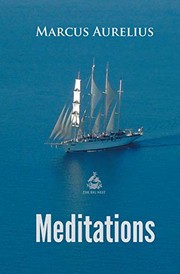
The private journal of a Roman emperor, written to himself during military campaigns around 170–180 AD, working through how to stay calm, fair and disciplined while running an empire.
- Who it's for: readers who want philosophy as personal, practical advice rather than abstract argument.
- What it's like: short, fragmentary entries you can read a few at a time, closer to a journal than a treatise.
- Which edition: the Gregory Hays translation (Modern Library, 2002) is the most commonly recommended for readability.
- Where to start: Meditations, written c. 170–180 AD.
4. Letters from a Stoic by Seneca
A collection of letters the Roman statesman Seneca wrote to his friend Lucilius, covering everything from facing death to handling wealth to dealing with difficult people.
- Who it's for: readers who liked the idea of Meditations but want something a little warmer and more conversational.
- What it's like: written as actual correspondence, so it reads less like a lecture and more like advice from someone you trust.
- Where to start: Letters from a Stoic, written in the 1st century AD.
Classical Greek philosophy
5. The Republic by Plato
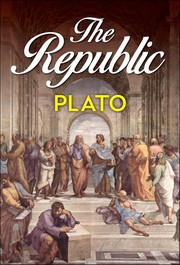
A dialogue, led by Socrates, that starts out asking what justice is and ends up designing an entire imagined ideal society — including the famous allegory of the cave, about the difference between appearance and reality.
- Who it's for: readers ready for the real foundational text of Western philosophy, in dialogue form rather than straight argument.
- What it's like: conversational and often funny in places, though it does wander and requires patience in the middle sections.
- Where to start: The Republic, written c. 375 BC.
Eastern and medieval philosophy
6. Tao Te Ching by Laozi
A short collection of 81 brief verses on living in harmony with "the Tao" (the way), covering leadership, simplicity and letting go of control — foundational to Taoism.
- Who it's for: readers who want an entry point into Eastern philosophy that's short enough to read in one sitting.
- What it's like: poetic and deliberately paradoxical; it rewards slow, repeated reading rather than a single pass.
- Where to start: Tao Te Ching, traditionally dated to around the 4th century BC.
7. The Consolation of Philosophy by Boethius
Written by a Roman official while he was imprisoned awaiting execution on a treason charge, this is a dialogue between the author and a personified "Lady Philosophy" about how to find peace despite a terrible fate.
- Who it's for: readers who want philosophy wrestling with a genuinely desperate real-life situation, not an abstract thought experiment.
- What it's like: alternates between prose and verse, and carries real weight once you know the author was executed shortly after finishing it.
- Where to start: The Consolation of Philosophy, written around 523 AD.
Modern and applied philosophy
8. Man's Search for Meaning by Viktor Frankl
A psychiatrist and Holocaust survivor's account of his time in Nazi concentration camps, paired with the psychological framework (logotherapy) he developed from observing what let some prisoners keep going.
- Who it's for: readers who want philosophy grounded in lived, extreme experience rather than abstract theory.
- What it's like: part memoir, part argument, short enough to finish in an afternoon and genuinely hard to forget.
- Where to start: Man's Search for Meaning (1946), a standalone.
9. Justice: What's the Right Thing to Do? by Michael Sandel
Built from Sandel's famous Harvard "Justice" course, this book walks through major theories of justice and ethics — utilitarianism, libertarianism, Kantian duty — using real contemporary dilemmas rather than hypotheticals alone.
- Who it's for: readers who want a guided tour of competing modern ethical frameworks without picking up four separate philosophers' complete works.
- What it's like: conversational and classroom-structured, built to make you argue with it rather than just read it.
- Where to start: Justice: What's the Right Thing to Do? (2009), a standalone.
If you only read one from each group
- Easiest starting point: Sophie's World.
- Practical Stoicism: Meditations.
- Modern and applied: Man's Search for Meaning.
Want more on how the mind works alongside how to think? See our best psychology books list, or browse every list on our best book lists hub.
FAQ
What is the best philosophy book for a true beginner?
Sophie's World by Jostein Gaarder is the easiest entry point: it's a novel that walks through the entire history of philosophy through a story, rather than asking you to read primary texts cold.
Which translation of Meditations should I buy?
The Gregory Hays translation (Modern Library, 2002) is the one most commonly recommended for readability, and it's the edition we recommend starting with.
Do I need to read Plato's Republic in order with other dialogues?
No. The Republic is self-contained and does not require reading Plato's other dialogues first, though it references ideas (like the Socratic method) that are easier to follow if you've read a short dialogue like the Apology first.
What is a good philosophy book that isn't ancient?
Man's Search for Meaning by Viktor Frankl (1946) and Justice: What's the Right Thing to Do? by Michael Sandel (2009) are both modern and highly accessible.
What is Stoicism and where should I start reading about it?
Stoicism is an ancient Greek and Roman philosophy focused on controlling your reactions rather than external events. Meditations by Marcus Aurelius and Letters from a Stoic by Seneca are the two most commonly recommended starting points.
Nine books, over two thousand years of thinking about how to live. Start with Sophie's World if you want the map first, or Meditations if you just want to get started.
Want a free set of printable bookmarks?
Made for cozy readers working through a long series in order. Print at home, cut, and slip one into whatever you're reading tonight. They're free. Then browse all our reading-order guides.
Get the free bookmarks →As an Amazon Associate, we earn from qualifying purchases.