Best Books
Best Dystopian Novels for Adults
Quick answer
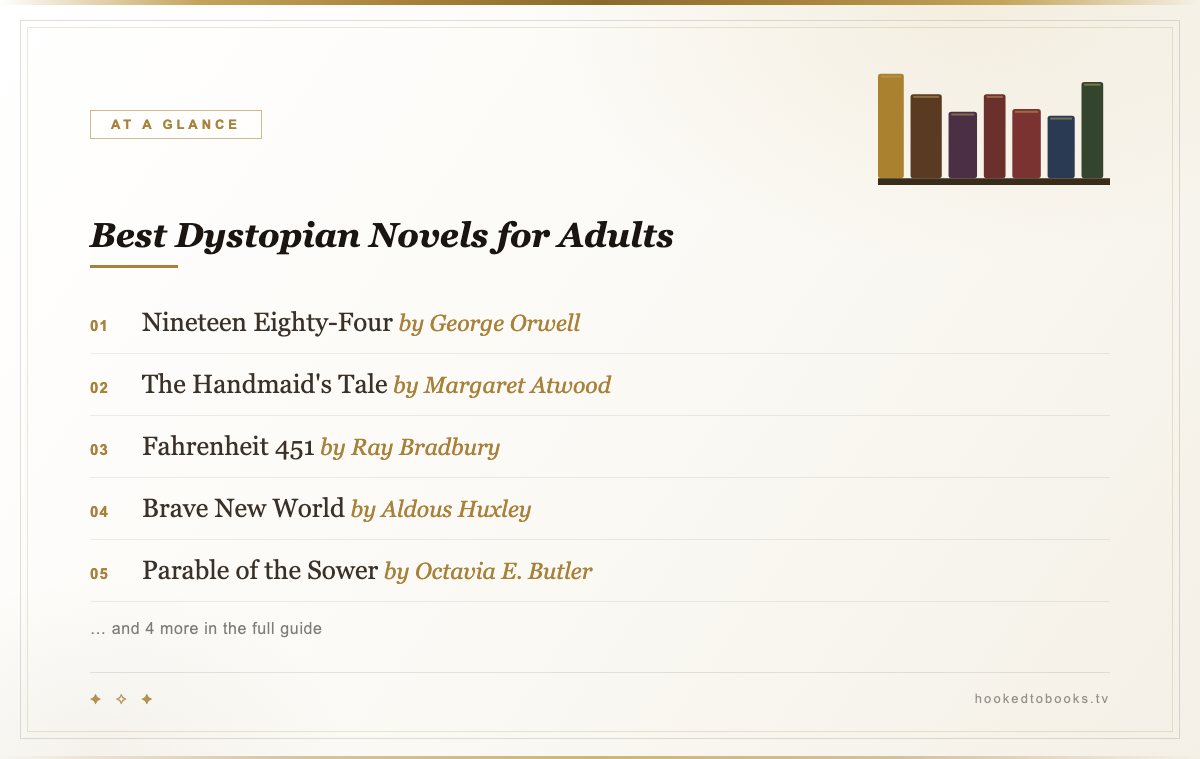
Read Nineteen Eighty-Four by George Orwell first. It's the novel every other dystopia gets compared to: surveillance, censorship, and a government that controls reality itself by controlling language.
The 3-book shortlist: Nineteen Eighty-Four (the genre's benchmark), Brave New World by Aldous Huxley (control through pleasure instead of fear) and The Handmaid's Tale by Margaret Atwood (the one that feels most current to readers today).
As an Amazon Associate, we earn from qualifying purchases.
Dystopian fiction for adults tends to split into two camps: control through fear and surveillance, or control through comfort and distraction. The nine books below cover both camps plus a few that don't fit either box, each one chosen because it's still widely read and discussed decades (or just years) after publication, not because it has the word "dystopia" on the cover.
How We Chose
We picked books built around a fully realized society gone wrong, not just a single bad event, and favored ones with lasting critical and reader reputation. Every year and award was checked against Wikipedia and Open Library as of October 2026.
If you want control through fear
1. Nineteen Eighty-Four by George Orwell
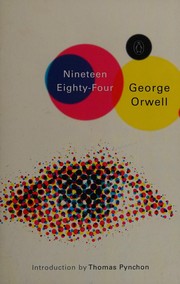
Winston Smith works for the Party, rewriting history for a living, in a London watched constantly by telescreens and Big Brother — until he starts keeping a forbidden diary and falling for a woman who hates the Party as much as he does.
- Who it's for: anyone who wants the source of terms like "Big Brother," "doublethink" and "thoughtcrime," still unsettling decades later.
- What it's like: bleak, precise, and more interested in how language shapes thought than in action.
- Where to start: Nineteen Eighty-Four (1949), a standalone.
2. The Handmaid's Tale by Margaret Atwood
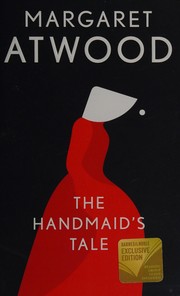
In the Republic of Gilead, fertile women are assigned as "Handmaids" to bear children for ruling-class couples, stripped of names, money and freedom in the name of a declared national emergency.
- Who it's for: readers who want a dystopia built specifically around gender, reproduction and religious authoritarianism.
- What it's like: close first-person narration, told partly in flashback, with restraint that makes the horror land harder.
- Series status: Atwood wrote a direct sequel, The Testaments (2019), which won the Booker Prize.
- Where to start: The Handmaid's Tale (1985).
3. Fahrenheit 451 by Ray Bradbury
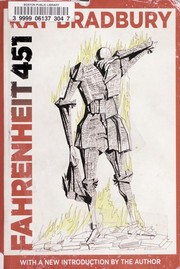
Guy Montag is a fireman whose job is burning books, in a society that has traded reading and reflection for wall-sized screens and constant noise — until he starts hiding books instead of burning them.
- Who it's for: readers who want a shorter, more symbolic read about censorship and media saturation rather than political structure.
- What it's like: lyrical and compact, more concerned with ideas and imagery than plot mechanics.
- Where to start: Fahrenheit 451 (1953), a standalone.
If you want control through pleasure
4. Brave New World by Aldous Huxley
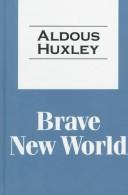
In a future World State, humans are engineered and conditioned from before birth into rigid castes, kept docile with a euphoria drug called soma and endless recreational sex, until a man raised outside the system is brought in to see it firsthand.
- Who it's for: readers who find comfort-based control scarier than fear-based control, or who want the classic counterpoint to 1984.
- What it's like: satirical, clinical in tone, and unnervingly calm compared to most dystopias.
- Where to start: Brave New World (1932), a standalone.
If you want societal collapse, not just oppression
5. Parable of the Sower by Octavia E. Butler
In a California devastated by climate change, economic collapse and roaming violence, a teenager with a condition that makes her feel others' pain starts a new belief system and leads a small group north in search of safety.
- Who it's for: readers who want climate and economic collapse specifically, rather than an authoritarian government as the central threat.
- What it's like: journal-format, grounded and specific about how a society actually falls apart day to day, with a thread of hard-won hope running through it.
- Series status: followed by one sequel, Parable of the Talents (1998).
- Where to start: Parable of the Sower (1993).
6. The Road by Cormac McCarthy
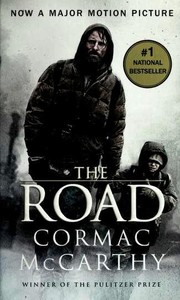
A father and son walk south through the ash-covered ruins of a post-apocalyptic America, carrying almost nothing, trying to stay alive and "keep the fire" without saying out loud what that means.
- Who it's for: readers who want the bleakest possible version of this genre, stripped down to a single relationship.
- What it's like: sparse, nearly punctuation-free prose, no chapter breaks, and almost no explanation of what caused the disaster.
- Where to start: The Road (2006), a standalone.
7. Station Eleven by Emily St. John Mandel
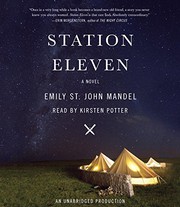
Twenty years after a flu pandemic kills most of the world's population, a traveling troupe of actors and musicians moves between small settlements performing Shakespeare, while the novel jumps back and forth to the outbreak itself.
- Who it's for: readers who want a pandemic-collapse story that's more about what people rebuild and keep than about the collapse itself.
- What it's like: literary, non-linear, and more interested in art and connection than in survivalist detail.
- Where to start: Station Eleven (2014), a standalone.
If you want something quieter or more speculative
8. Never Let Me Go by Kazuo Ishiguro
Kathy, Ruth and Tommy grow up at Hailsham, an English boarding school that seems idyllic on the surface, slowly realizing over the course of the novel exactly what their lives have been designed for.
- Who it's for: readers who want a dystopia revealed slowly through tone and implication rather than stated outright in chapter one.
- What it's like: restrained, melancholic, and almost gentle in its prose, which makes the underlying premise land harder once it's clear.
- Where to start: Never Let Me Go (2005), a standalone.
9. The Power by Naomi Alderman
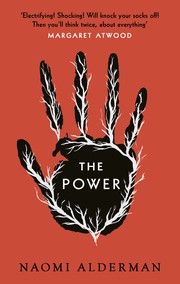
Teenage girls worldwide suddenly develop the ability to generate electric shocks at will, and the novel traces how fast that single change in who holds physical power reshapes politics, religion and daily life.
- Who it's for: readers who want a modern, high-concept dystopia that flips a single assumption and follows the consequences all the way through.
- What it's like: multiple global points of view, framed as a historical document being studied in the far future, with real bite in how it portrays power once the shoe is on the other foot.
- Where to start: The Power (2016), a standalone.
If you only read one from each group
- Control through fear: Nineteen Eighty-Four.
- Control through pleasure: Brave New World.
- Collapse, not oppression: Station Eleven.
- Quietly devastating: Never Let Me Go.
Want this for teens instead? See our best dystopian books for teens list, or more survival fiction on our best post-apocalyptic books guide.
FAQ
What is the best dystopian novel for adults?
Nineteen Eighty-Four by George Orwell is the most commonly named best dystopian novel and the one most other dystopian fiction is measured against.
What is the difference between 1984 and Brave New World?
1984 imagines control through surveillance, fear and punishment; Brave New World imagines control through pleasure, consumption and engineered happiness. Many readers consider them opposite visions of the same fear.
Is The Handmaid's Tale a standalone book?
The original 1985 novel is a complete standalone story. Margaret Atwood published a direct sequel, The Testaments, in 2019, which won the Booker Prize.
What is a good modern dystopian novel, not a classic?
Station Eleven (2014) and The Power (2016) are both widely read modern entries, each taking a different angle: a pandemic's aftermath and a sudden shift in who holds physical power.
What dystopian novels are about climate or environmental collapse?
Parable of the Sower by Octavia Butler (1993) is the classic environmental-collapse dystopia, set in a California ravaged by climate change and economic breakdown.
Nine visions of what could go wrong, from 1949 to 2016. Start with Nineteen Eighty-Four.
Want a free set of printable bookmarks?
Made for cozy readers working through a long series in order. Print at home, cut, and slip one into whatever you're reading tonight. They're free. Then browse all our reading-order guides.
Get the free bookmarks →As an Amazon Associate, we earn from qualifying purchases.